Jun. 1, 2026 "What a recent B.C. court decision could mean for remote work": Today I found this article by Sarah Petz on CBC:
As more workers across the country find themselves forced back into the office full time, experts say a recent court decision in British Columbia could have broader implications for remote work — and shows why employers need to implement return-to-office mandates with care.
In mid-May, the B.C. Court of Appeal upheld a decision finding that
an employee of a Vancouver-based real estate development company was constructively dismissed
when they abruptly ended her longstanding remote work arrangement
and directed her to return to the office full time.
The Supreme Court of Canada defines constructive dismissal as
when an employer unilaterally makes substantial changes to the essential terms of an employee’s contract
that the employee does not agree to
and leaves their job.
The plaintiff, Tracy Parolin, had had a flexible work schedule with her employer, Cressey Construction Corporation, since returning from maternity leave in 2013 after giving birth to twins, one of whom had a significant health issue, the appeal court decision says.
In March 2020, Parolin started working remotely along with the rest of Cressey employees due to the COVID-19 pandemic.
When other employees returned to the office, she continued to work from home with the approval of successive supervisors who understood her childcare needs, the decision says.
But at a meeting to discuss a salary increase in May 2023,
a new supervisor revoked her flexible work arrangement
and directed her to return to the office full time.
Parolin left her job shortly thereafter as a result,
court documents say.
Cressey had argued there were no explicit terms in Parolin's contract that stated she could work from home full time and/or outside regular hours.
But the trial judge sided with Parolin, finding that her flexible working hours had become
an enforceable, fundamental term of her employment
and had been supported for years by her employer.
The judge also found the company's change to this arrangement was made unilaterally and without notice.
CBC News reached out to Cressey Construction Corporation, now operating under the name Cressey Development Group, for comment but did not receive a response.
In an interview, Parolin said the appeal court's decision validated her feeling that what happened "wasn't right."
She said she hopes the case sheds light on the need for flexible work arrangements
so that people can balance work
and their personal lives,
adding that having that flexibility "didn't make me work less."
"It allowed me to be fully in my role
and work on my career
and also be there for my family."
The wave of return-to-office mandates has been
"awful" for many parents who are not only facing extra expenses from
commuting
but also for childcare,
said Allison Venditti, a Toronto-based human resources expert and founder of Moms at Work.
"This is a really big problem from multiple angles for people who are already struggling."
Venditti said she's monitoring a lot of legal cases surrounding remote work that are working their way through the court system,
and she expects more will crop up as more and more Canadians are pulled back into the office.
"I tell everybody, just watch or sign up for updates on legal cases because, over the next 18 months, they're going to be fast and furious."
What's interesting about Parolin's case is that it demonstrates that remote work arrangements can become essential terms of employment,
said Ryan Berger, an employment lawyer at Lawson Lundell LLP in Vancouver.
"So when organizations are considering remote work or changes to remote work,
like a return-to-office mandate,
then they need to be thoughtful about it."
He said he expects lawyers representing employees will be paying attention to this decision and may try to argue their client is in a similar situation as Parolin.
"I'm sure we'll see this case get cited across the country for that argument."
Employers can't 'pivot too quickly'
Berger and other employment lawyers said the outcome in this court case
doesn't mean employers can't ask employees to return to the office full time,
but it does show what can go wrong if it's not done carefully.
"This decision shouldn't scare employers into the idea or concept that any return to work is going to lead to constructive dismissal,"
said Sundeep Gokhale, a Toronto-based employment lawyer with Sherrard Kuzz.
"What it does do is highlight the mistakes an employer can make when they pivot too quickly."
The case demonstrates employers need to be "very clear" about their expectations, Gokhale said,
especially in cases where remote work might be used temporarily.
"What courts have established is that the location of the workplace is an absolute fundamental term and condition of employment."
However, Vancouver-based lawyer Melanie Harmer, who practices employment litigation,
said she thinks the court may have ruled in the employer's favour
if Parolin didn't have the flexible work arrangement prior to the pandemic.
"For many employers,
where they temporarily had their employees go home only because of the pandemic,
they'll be in a much better situation if they wish to call employees back to the office," she said.
https://www.cbc.ca/news/canada/bc-appeal-court-remote-work-decision-9.7217725
Jun. 4, 2026 "Market Outlook: Return-to-office policies test workplace flexibility": Today I found this article on BNN Bloomberg:
As employers continue refining return-to-office policies, questions remain about
productivity,
workforce flexibility
and how changing workplace expectations are affecting employees and families.
BNN Bloomberg spoke with Tammy Schirle, professor of economics at Wilfrid Laurier University, about the
evolving balance between office and remote work,
the role of flexibility in attracting and retaining workers,
and how labour market conditions may influence employee mobility.
Key Takeaways
- Return-to-office policies vary widely across industries, with many employers continuing to offer at least some remote-work flexibility.
- Evidence on productivity remains mixed, with benefits depending on the
- type of work,
- workforce needs
- and how organizations manage employees.
- Flexible work arrangements can be particularly valuable for families
- managing childcare,
- commuting demands
- and other responsibilities.
- Employers risk losing experienced workers if they remove flexibility that employees have come to value since the pandemic.
- Slower hiring conditions may limit workers’ ability to change jobs,
- although flexible work options remain available in many sectors.
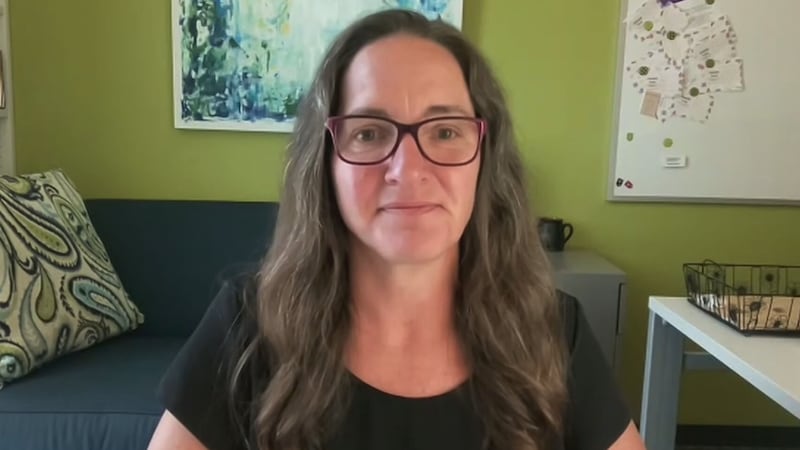
Read the full transcript below:
ROGER: With workplaces requiring more employees back in the office, we’re taking a look at the impact on employees ahead of the latest employment data. Here to discuss that and more is Tammy Schirle, professor of economics at Wilfrid Laurier University. Tammy, thank you very much for joining us.
TAMMY: Good morning.
ROGER: Where are we in the great return to work? Are most companies now — is everybody back in the office?
TAMMY: So this is actually really hard to measure. It turns out Statistics Canada hasn’t published a consistent series on this since last May of 2025.
And so when I’m looking for those numbers, I’m kind of patching together a few different things.
We’ve seen mandates from the federal government trying to bring people back into the office.
There’s some logistics there that are having some challenges. Some provinces are pushing for people to be back in five days a week, but some others are giving that flexibility and letting people stay home, say, two or three days a week.
So, there’s sort of a mixed bag of what’s going on in the public sector, and similarly in the private sector.
More innovative, younger firms, they’re embracing the work from home,
where some of the larger, older institutions, they’re trying to rein people in.
From the data that we have, it looks like we’re staying steady with people having at least some work-from-home provisions. Maybe it’s two days a week, one day a week, maybe entire days of the week,
where roughly 20 per cent of men
and 25 per cent of women
have been working from home,
and that seems pretty steady since about 2023.
GRANT: Tammy, I’m curious, like, and you bring up the statistics, which are a bit — it seems like a bit wishy-washy right now. I’m curious on, like, whether or not you think companies are actually measuring productivity and the evidence behind bringing people back, or is this just — are they counting butts in seats at this point? Or is there any evidence that’s justifying what they’re doing?
TAMMY: So, from the evidence that we’ve seen, there’s a bit of a mixed bag here, right? We’ve got the anecdotes where, you know, people own these big office buildings, provincial governments have these big office buildings, they’re like, “Nobody’s in them. We need to fill them.”
It’s like, well, that’s not really a good reason to fill the building with those particular workers. Maybe you could find a better way to use it.
This isn’t necessarily going to be a productivity gain for a lot of these younger firms.
They’re embracing the work from home
and making sure that they can use it to increase their productivity.
They’re doing well there.
For some people,
and some firms,
there’s real productivity gains to coming into the office at least part of the week,
so that you have that chance to network,
and for young people, they get that chance to gain some mentoring,
get those chats that, you know, get work going, and that on-the-job training.
So the evidence here is a bit mixed, you know, it’s kind of —
it depends on who you are
and how well you really plan out your workforce.
There are productivity gains there to be had, both for workers and their own lives, and also for the firms, but it’s certainly not for everyone.
ROGER: And so it does sound really difficult to find the right balance for it. The one thing I heard was with the mentoring, people just aren’t learning as much because there’s no one to talk to,
and that, you know, you go to grab a coffee or you go to grab something, that’s when you have those conversations where you pick things up.
What’s kind of an impact is this having on the employees, excuse me, that they’re coming back in? They’ve gotten used to certain things.
Now all of a sudden they’re being told they’ve got to be back in three, four, even five days a week.
They’ve adjusted their life.
What kind of an impact is this having for them?
TAMMY: So, again, I think this is an “it depends” kind of thing, right?
There’s a lot of differences across the market.
If you’re a young person who’s making your way into the office, you might have had to change where you’re living and change your plans quite a bit.
If you’re a young family, parents, they were the ones who really appreciated those work-from-home options, that flexibility it gave to be able to manage kids, drop-off, pick-up, the sick days, the soccer practices, and everything that comes with it, right?
Rather than spending a couple hours a day on the highway, they could do these things with their families, and so that’s going to be the big adjustment that I think most families are trying to make right now.
It’s going to eliminate a lot of opportunities for some families, where, you know, adding in that commute every day just isn’t a good option.
They’re going to be looking for other options. So I think some people, especially, you know, if you’re looking at some of your best employees who really enjoyed those work-from-home flexible options, they’re going to be looking for those options with somebody else, and there are plenty of employers still offering it.
So, I think that in the long run, there’s going to be some adjustments made in the market here.
GRANT: You know, we’ve talked a lot, I’ve talked a lot about, like, you know, people being social animals and, you know, really craving more community,
and especially in this post-pandemic world, and, you know, one of the traditional places people found that community was in the workplace.
So, do you have any concerns about, you know, if companies are staying at more of a work-from-home type of situation, that, you know, there’s social isolation that’s going to continue on, and the impacts of what that might be, not just in the next few years, down the road, five to 10 years from now, and even further?
TAMMY: Well, on one hand, I think my impression is that there are some
employers who have embraced that flexibility and work from home
and just are very intentional in bringing together their employees,
whether that’s online or in person.
When they plan an in-person day, it’s very intentional to make sure that everybody sees each other.
There’s other employers who just have people showing up in the office and people sit alone in their office all day.
This isn’t working out well for anyone, and so again, there’s that mixed bag.
But outside the office, maybe you have better opportunities now for that social contact that isn’t just your work, and so perhaps, you know,
Canadians can embrace their identity as something other than workers in an office
and develop those networks elsewhere.
ROGER: And now you mentioned people having options to look elsewhere for jobs.
With unemployment at 6.9 per cent, how many options are there?
Is it easy for people to move with the situation,
or with that unemployment rate where it’s at, it’s not as easy?
People are kind of stuck where they are, to a degree.
TAMMY: It’s certainly not as easy right now as it would have been a couple of years ago. I mean, the unemployment rate has been hovering between 6.4 and 7.1 per cent for the past two years, so 6.9 per cent is kind of normal for the past couple of years.
A lot more opportunity for moving around in, say, 2021-22 because everybody was doing it, so there were lots of job openings and places to look for.
Right now, I think with everything that’s going on in the world, you’re talking about some of our recession indicators that are out there right now, people are holding on, right?
They know that it’s difficult to find a job if they were to quit today and start looking for something,
so they’re going to be holding on to what they have.
But there’s many industries where there’s still, you know, upwards of half to two-thirds of workers having these options,
and your best workers are going to be able to find those,
especially the more experienced ones.
If you’re young and just starting out in the world,
that’s a big risk to take right now,
to quit a job and try to look for something else.
They’re not finding the same types of opportunities.
ROGER: All right, Tammy, we have to wrap it up there. But thank you very much for joining us.
TAMMY: Thank you.
ROGER: Tammy Schirle, professor of economics at Wilfrid Laurier University.
---
This BNN Bloomberg summary and transcript of the June 4, 2026 interview with Tammy Schirle are published with the assistance of AI.
Original research, interview questions and added context was created by BNN Bloomberg journalists.
An editor also reviewed this material before it was published to ensure its accuracy and adherence with BNN Bloomberg editorial policies and standards.

No comments:
Post a Comment